The certification checklist: FDA, CE and ISO standards in dental aligners
What each standard covers, how to verify it, and a quick-check protocol your team can use with any supplier.
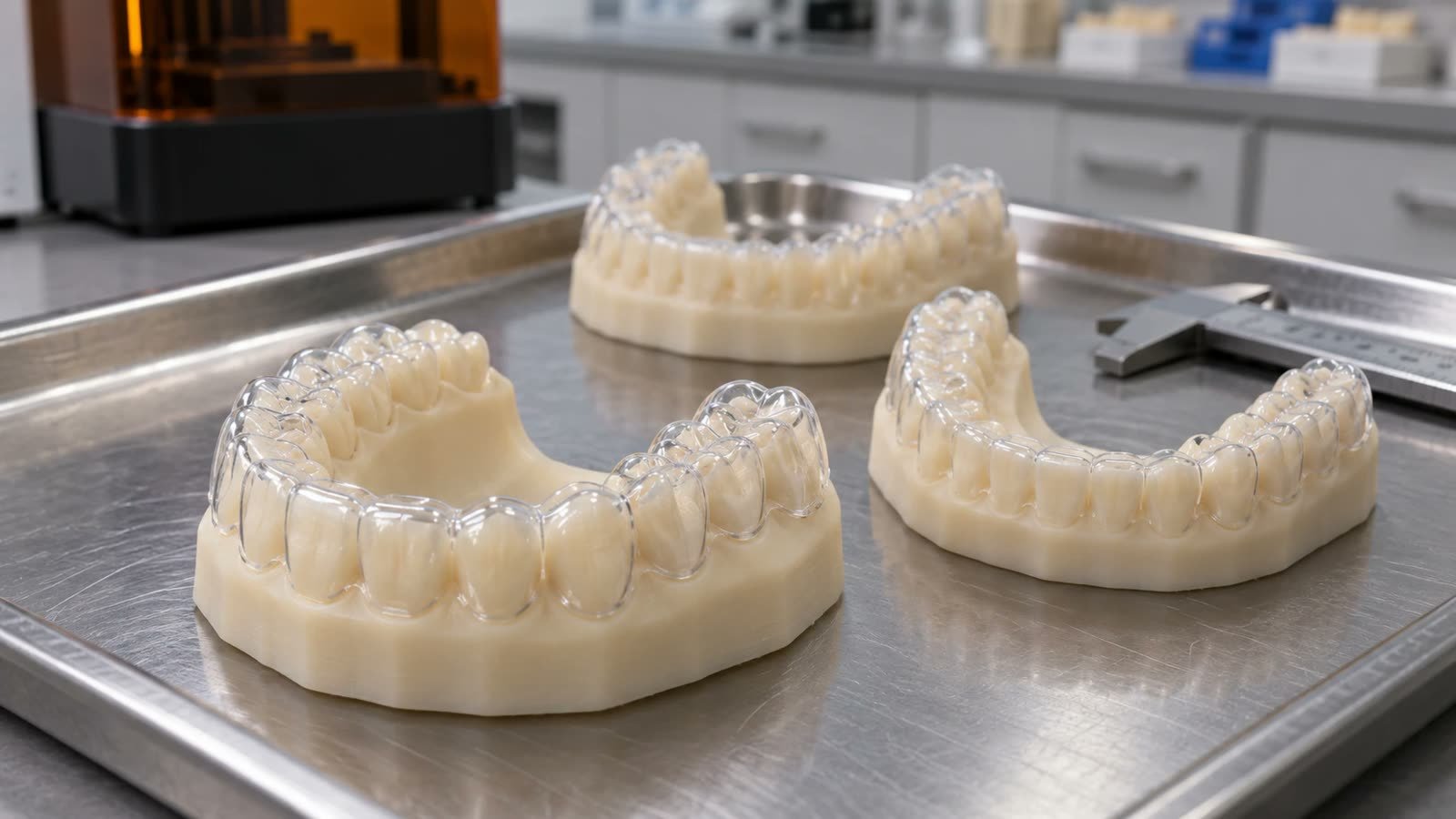
Two aligners can look identical in the box and still behave very differently in the mouth. Much of that difference comes from how the models behind each tray were made: printed in 3D for every stage, or shaped by hand in a 2D process.
Every aligner is thermoformed over a model of the patient’s teeth at one stage of treatment. What differs is how those models are produced.
The key difference is precision. Each printed model matches the digital plan for that stage, so the aligner fits the way the plan intends and applies force where it should. The result is a consistent fit from one aligner to the next and more predictable treatment.
Manual 2D production is less accurate. Small errors in each hand-made step add up, so aligners often track poorly, teeth fall behind the plan, and refinements become more likely.
Mainly cost: the resin used in 3D printing is expensive. The saving usually comes at the expense of results, with less precise aligners, a poorer fit and more refinements. Over a full treatment, that can cost the practice more in chair time and patient confidence than it saved.
Not sure what your current brand uses? Ask us. We evaluate brand queries free of charge.

What each standard covers, how to verify it, and a quick-check protocol your team can use with any supplier.

Which certifications to verify, how production methods differ, and where expert advice saves time.